





The Müller family sits at their kitchen table, bewildered. They have a letter from the council: the district heating network will be expanded from 2028. But their gas heating system is only ten years old. Do they need to act? What costs are they facing? There is great uncertainty – and the Müller family is not an isolated case. This is precisely where successful citizen participation is decided: Are concerns taken seriously and information conveyed clearly, or are people left out?
Citizen dialogue needs more than brochures
The heating transition is not just a technical project, but a societal process. It affects tenants, homeowners, and entire neighbourhoods. This makes communication that is clear, accessible, and dialogue-oriented all the more important. However, traditional formats like info sheets or public meetings reach only a few. Many feel overwhelmed, others not addressed at all.
Explainer videos as a bridge in dialogue
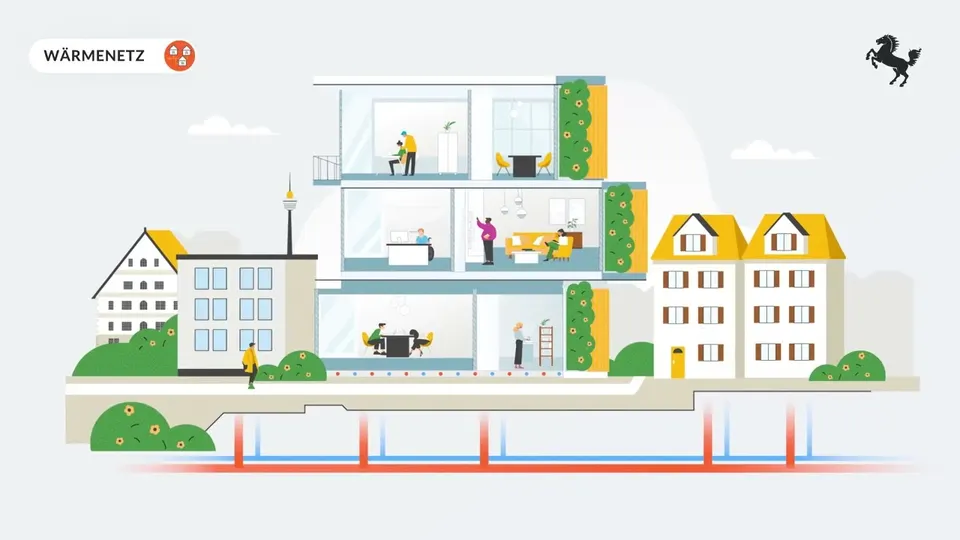
A well-made explainer video can achieve in 90 seconds what long presentations cannot: clarity, orientation, and trust. Visual stories make visible what otherwise remains abstract: How does a heating network work? What role do heat pumps play? What options do I have as a citizen?
Especially with an emotionally charged topic like the heating transition , animated explainer videos offer crucial advantages:
- Complex issues are presented in a simplified way
- Scenarios can be compared ("What happens if I wait now?")
- Emotions are addressed without polarising
This creates entry points for dialogue, significantly facilitating discussions at public meetings or in online forums.

Promote participation instead of provoking resistance
Especially in municipal heat planning, attitude and tone are decisive. An explainer video that informs respectfully and shows perspectives signals: "We listen to you, we take your questions seriously."
- Citizens feel understood rather than lectured
- Discussions become more constructive
- Trust in administration and energy providers grows
Humour or relatable everyday examples can also help bridge the gap between technical jargon and people's real-life experiences.
Successful practical examples
Utility companies and energy providers who already use explainer videos report resounding successes. The number of consultations increases, but the conversations themselves become more efficient because citizens come well-informed.
An energy provider from Southern Germany reports: After the release of an explainer video series on heat pumps, qualified enquiries increased by 73%. The videos were not only embedded on the website but also used in consultations and shared via social media. The investment paid for itself within a few months.
From information to participation
A single explainer video is good – a well-thought-out video strategy is better. Because the heating transition requires different approaches for different target groups. Homeowners have different questions than tenants, rural regions have different challenges than large cities.
A modular video series can reflect this diversity: an overview video explains the basics, specific videos delve into individual technologies, tutorials show concrete steps for action. The videos can be embedded on websites, integrated into email campaigns, shown at events, and distributed via social media. This creates a consistent information network that meets citizens where they are – and actively invites them to ask questions and participate in discussions.
The right tone makes the music

With a topic like the heating transition , the tonality is crucial. The videos should honestly address challenges but also show solutions. Technical terms are explained, not assumed.
The address is respectful and appreciative – no one is judged for their previous heating system. Humour can help lighten the atmosphere but should be used sparingly. Important: Citizens should feel understood and actively involved in the dialogue.
Conclusion: The heating transition only succeeds through dialogue
The heating transition is here to stay. Whether it succeeds largely depends on whether municipalities manage to bring people along. Explainer videos are one of the most effective tools: they explain complex connections, build bridges between administration and citizens, and turn uncertainty into an invitation to participate.
Investing in visual communication today not only strengthens acceptance for tomorrow but also citizen dialogue. Because successful transformation only happens with citizens – not over their heads.