


Artificial intelligence has revolutionised many areas of content creation – including explainer video production. AI-powered tools now enable the automatic generation of avatars, text-to-speech voiceovers, animated graphics, or even complete video scripts. This sounds efficient, fast, and cost-effective at first.
However, reality shows: A good explainer video is not created at the push of a button.
And certainly not without a concept, target audience understanding, and creative fine-tuning.
AI is a tool – not a substitute for professional execution
AI can accelerate processes. It can generate ideas, visualise simple workflows, or structure content. But it understands neither your product in detail nor your target audience emotionally.
What it produces is often generic, visually monotonous, and linguistically superficial.
An effective explainer video is more than animated text and a digital voice. It needs:
- a well-founded script that translates specialist knowledge understandably
- a visual language that suits the brand
- a clean storyboard with a didactically sound structure
- speakers with credible voices
- and last but not least: a feel for tone, timing, and target audience approach
This is precisely the difference between an AI-generated video and a bespoke production by an experienced studio.

Why professional explainer videos work
A professionally produced explainer video combines design, text, animation, audio, and strategy into a coherent overall effect.
Instead of interchangeable elements, a visual communication toolis created that specifically builds trust, conveys information precisely, and emotionally engages the target audience – whether for software, industrial products, or services.
Furthermore, an experienced studio accompanies the entire process: from defining objectives and concept to finalisation. Queries are considered, adjustments are implemented flexibly, and quality remains consistently high.
Using AI wisely – but with expert guidance
Artificial intelligence is far more than just a technological buzzword; it is a powerful tool that, when used smartly, can deliver transformative results. Of course, AI can already be integrated into content production very effectively and profitably today. For example, it can serve as tireless support in creating raw texts, generate initial layout suggestions, or act as a creative sparring partner for brainstorming.
Especially in professional and extensive productions, it can significantly save time by taking over repetitive and time-consuming processes such as research, data analysis, or the creation of standard graphics, thereby simplifying and accelerating the entire process.
But – and this is the crucial point – it by no means replaces the profound conceptual and indispensable creative work that forms the heart of every successful communication. An AI can recognise patterns, but it cannot develop a vision. It can process data, but it cannot evoke emotions. And it certainly cannot design an overarching, market-specific strategy based on target audience analysis, brand values, and long-term corporate goals.
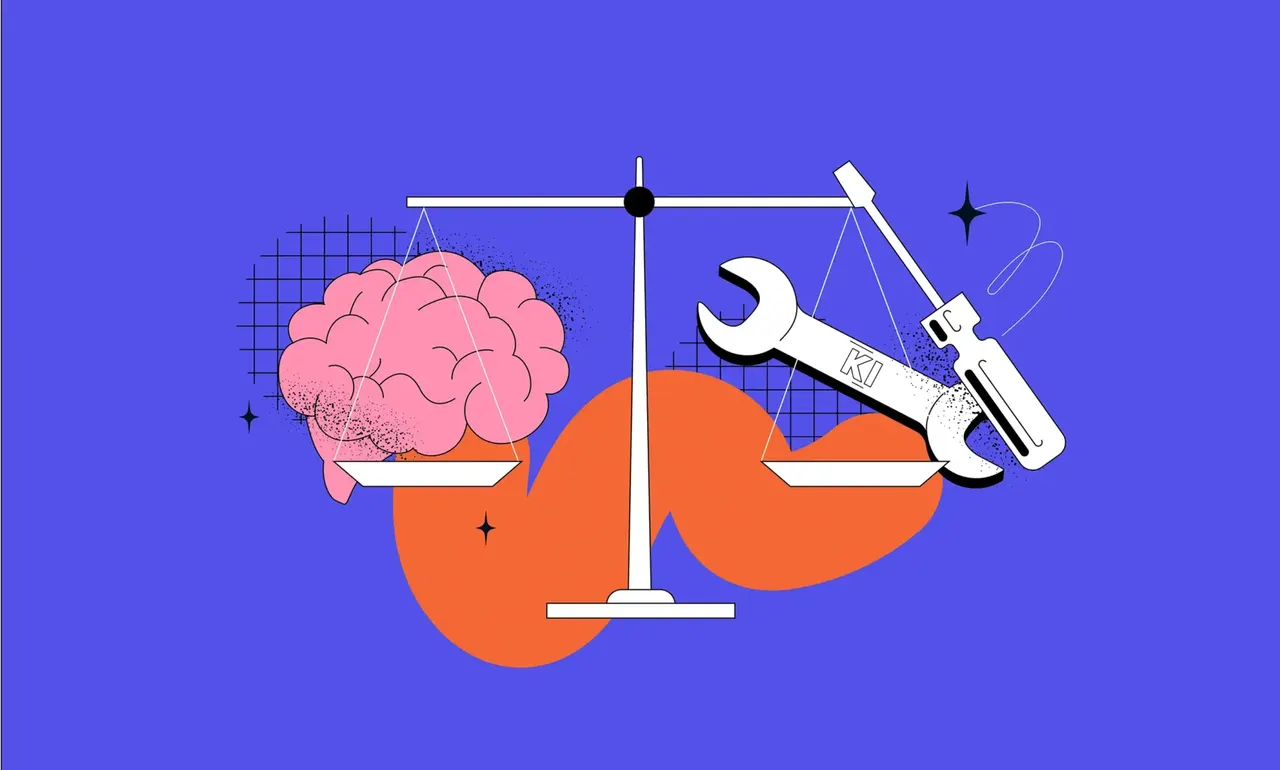
Therefore, anyone who wants to achieve more with their explainer video or other content than just a technically clean and quickly animated explanation should under no circumstances rely solely on cold automation. True success lies in the symbiosis of human expertise and machine efficiency.
Conclusion
An explainer video that truly works – one that not only informs but sustainably converts, explains complex facts understandably, and completely convinces its audience – is never created with a single tool alone. The idea that a click of a button automatically generates a strategically thought-out and emotionally appealing video production is an illusion. Rather, such a project requires a solid foundation of profound expertise, years of experience in dramaturgy and storytelling , and that indispensable creative precision that transforms mere information into a captivating story.
Undoubtedly, artificial intelligence is a fascinating and increasingly important component in the modern production process. It can serve as a tool to accelerate processes and expand creative possibilities.
However, the best, most effective, and ultimately most successful result only emerges when humans and technology interact meaningfully in a well-thought-out symbiosis. This process must be guided by a well-rehearsed team of strategists, writers, and designers who know exactly how to decipher complex, dry content and transform it into visually strong, clearly structured, and emotionally convincing videos that precisely reach their target audience.