

Since AI image generators like Midjourney, GPT Image-2 or Nanobanana are making rapid progress, one question is unavoidable: Do we still need illustrators?*
The answer is clear: Yes – more than ever.
Because as impressive as AI images may seem at first glance, a second look reveals what they lack: Intent. Context. Stance. And a real visual concept.
AI generates images – but not ideas
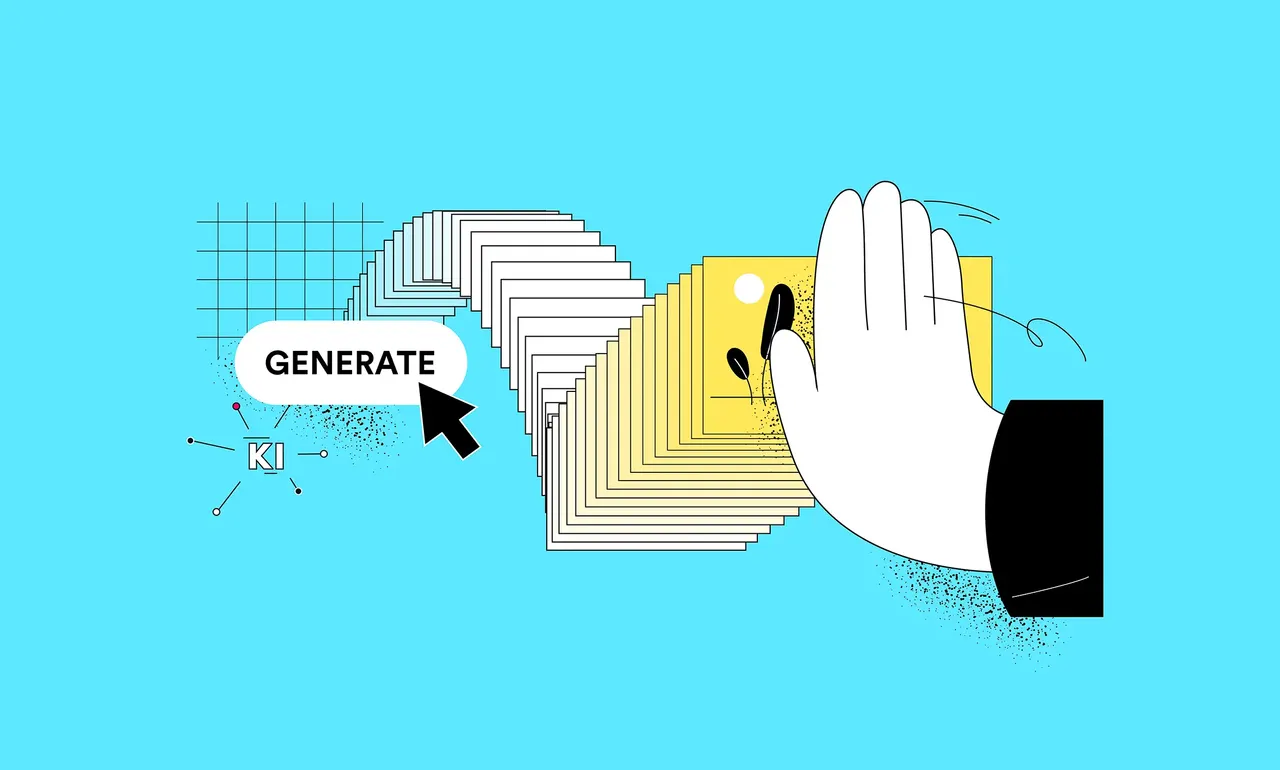
An AI combines existing material. It mixes styles, motifs, and compositions based on billions of datasets. But it does not understand what it is doing – or why.
A good illustration, however, does not start with the tool, but with the question:
👉 What message needs to be conveyed?
👉 What does the target audience need?
👉 How do I get complex content to the point – visually, clearly, emotionally?
This conceptual thinking cannot be replaced by a machine. Anillustratorfilters, condenses, and designs consciously – with stylistic devices tailored to the content, not to the randomness of a prompt.
Illustration is communication, not just decoration
An illustration is not an end in itself. It fulfils a clear function: it should explain, clarify, arouse curiosity, or evoke emotions. It is part of a communication strategy – and therefore requires a feel for language, target audiences , and tone.
An AI recognises no difference between a brochure on domestic violence, an urban development plan, and a children's book. It has no sense of nuance, no ethical responsibility, no style that suits you .
Good illustrations, on the other hand, are consciously designed – often minimalist, sometimes playful, but always purposeful.
Why companies should continue to rely on people
Anyone who wants to convey clear messages – be it in explainer videos, infographics, or campaigns – needs more than just pretty pictures. They need visual intelligence. And that does not come from algorithms, but from experience, briefing competence, and visual thinking.
Illustrators listen, ask questions, and think along. They recognise nuances, suggest suitable visual metaphors, and create coherent visual worlds that can shape your company in the long term.
AI, on the other hand, delivers short-term images – often impressive, but without substance.
The difference lies in the detail – and in the thinking
Of course, AI images can be a source of inspiration. They can complement mood boards or sketch initial visual directions. But when it comes to quality, recognition, expressiveness, and consistent visual language, a genuine creative signature is needed.
Especially in brand communication, every detail counts:
– What does your visual language look like?
– How do you speak to your audience – at eye level, playfully, clearly, seriously?
– How do you differentiate yourself from all the AI-generated standard images out there?
A good illustration answers precisely these questions. An AI does not.
Conclusion: Human design remains indispensable
Artificial intelligence changes many things – but it does not replace what makes good design: thought, attitude, style, and genuine understanding.
Illustrations are not arbitrarily interchangeable images. They are visual translations of ideas – by people who want to communicate. And that is a good thing.